
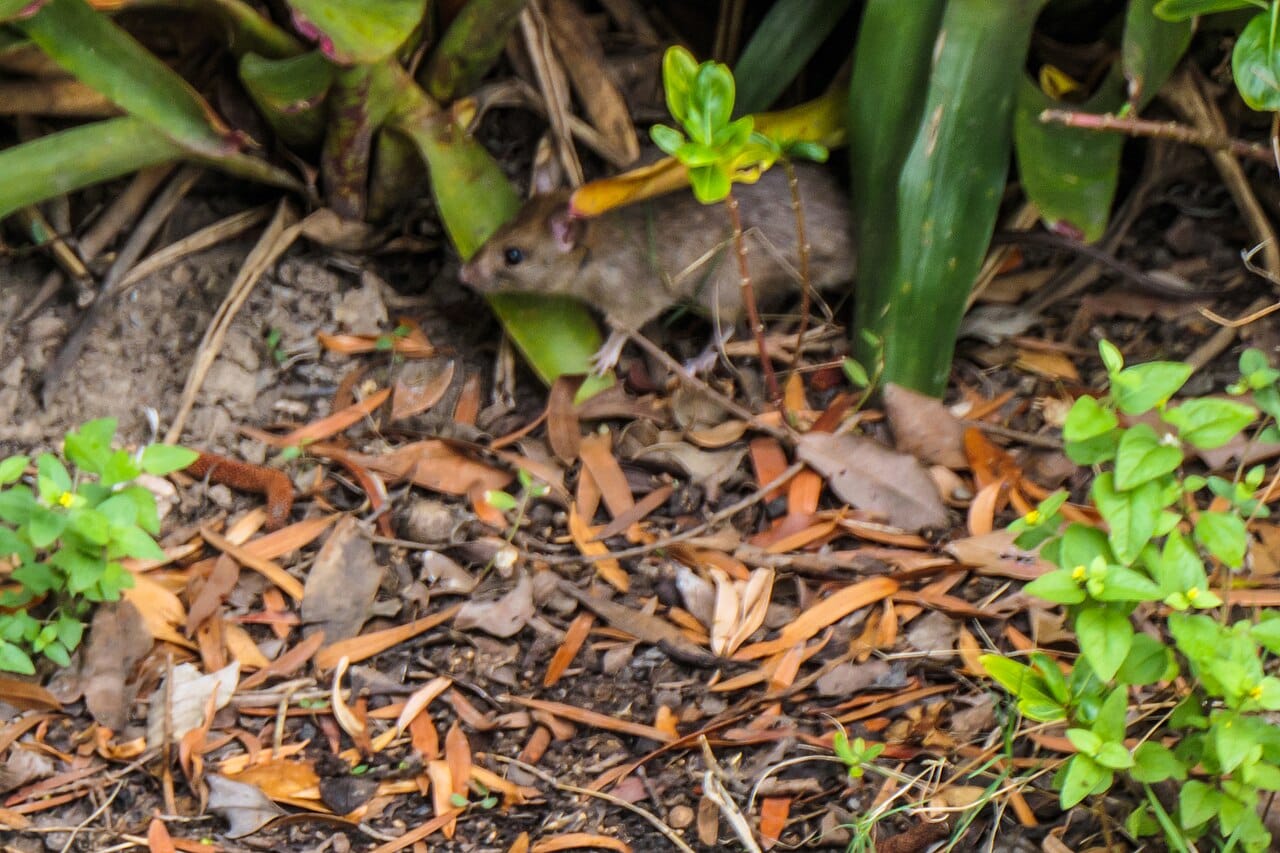
Rats and mice look for food, water and shelter. A small opening is enough for them to get into a building: a mouse can squeeze through a hole the size of a pen.
How to recognise them
- Black droppings shaped like a grain of rice (mice) or larger (rats)
- Gnaw marks on packaging, cables or woodwork
- Scratching noises in walls or ceilings, especially at night
- Greasy rub marks along walls
- A persistent smell of urine in enclosed areas
What are the risks?
Rodents contaminate food and surfaces and can transmit diseases such as leptospirosis. They also damage electrical cables, which can cause breakdowns or even fires.
Prevention: the right habits
- Seal holes and cracks, especially around pipes
- Store food in airtight containers, off the floor
- Take out waste regularly and keep bins closed
- Avoid leaving pet food out overnight
- Clear the surroundings of the building (wood piles, clutter, dense vegetation)
When to call a professional
If you see signs repeatedly, if activity affects a kitchen, a food business or a place open to the public, or if simple measures are not enough, call a professional. They will identify entry points and put a suitable plan in place.
This advice is provided for information only and does not replace medical advice or an on-site assessment.